Easter in Nigredo Monastery – The Path through the Sacred Triduum until Easter Monday
Easter – The Sacred Turning Point
When dusk envelops the hills of the Canton of Schwyz and the lights of the village of Reichenburg awaken hesitantly, the gate to the Triduum Sacrum opens. In Nigredo Monastery – Gethsemane Garden, Easter is the most important event of the entire year. The very name of the place proclaims it aloud: Here the Garden of Gethsemane is not merely remembered, but lived. Here the hour of greatest solitude and deepest surrender becomes the center of the entire spiritual path.
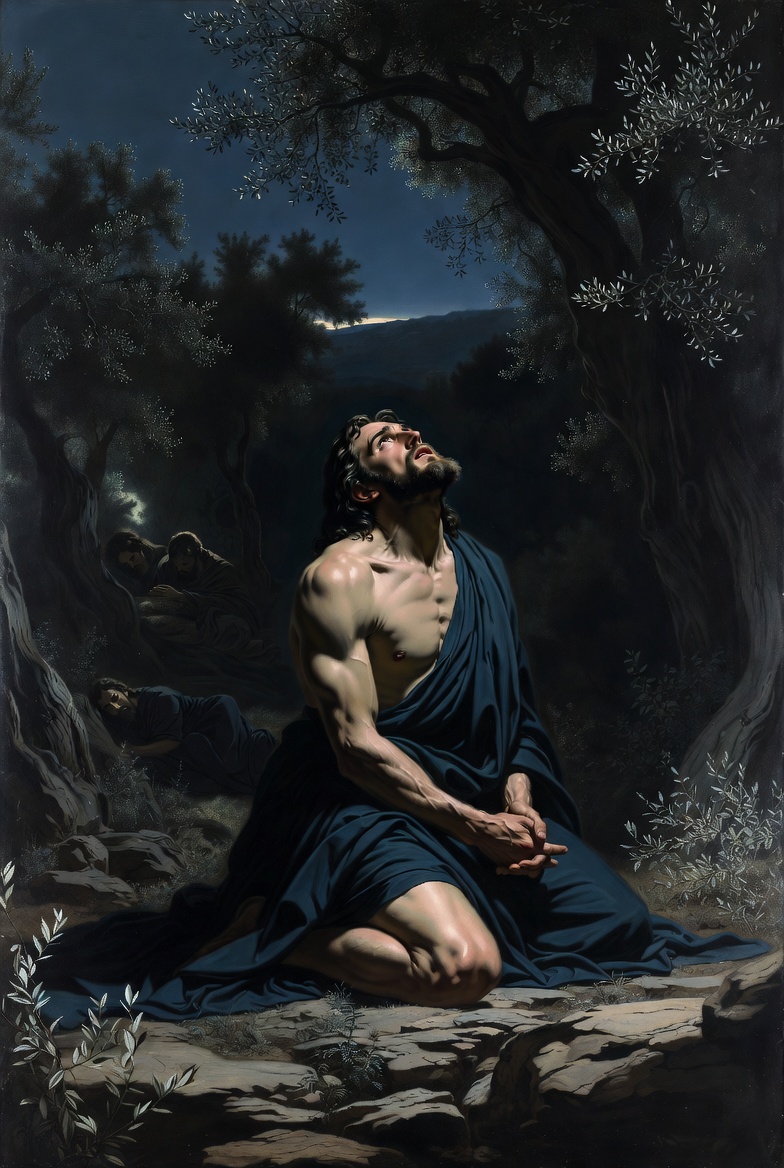
Father, if possible, let this cup pass from me – yet not my will, but yours be done.
Schedule - Easter
-
Holy Thursday: 7 p.m. Service - Vigil (12 hrs)
-
Good Friday: 10 a.m. Stations of the Cross - 3 p.m. Good Friday Liturgy
-
Holy Saturday: 9 p.m. Easter Vigil
-
Holy Sunday: 10 a.m. Service
-
Easter Monday: 10 a.m. Service
Maundy Thursday – Vigil – The Night Watch
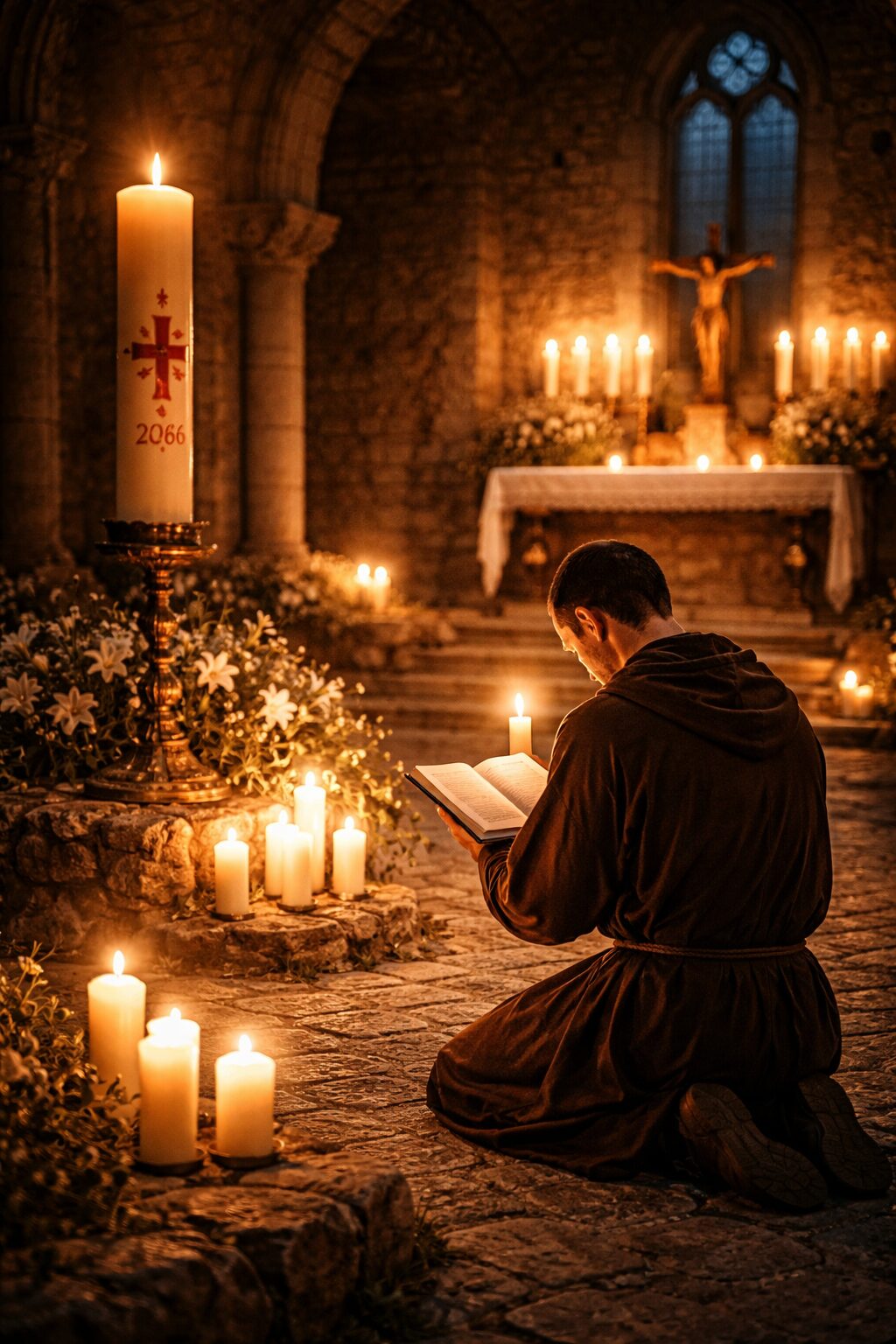
In the Catholic parish church of St. Laurentius in Reichenburg, on the hilltop, the small band of watchers gathers. At 7 p.m. the Mass of the Lord’s Supper is celebrated – the institution of the Eucharist, the washing of feet as a sign of serving love. Afterward the Lord does not remain alone. The altars are stripped, the tabernacle empty, the Eternal Light extinguished. The church becomes the Garden of Gethsemane: silent, dark, waiting.
From about 8 p.m. the night watch begins in St. Laurentius. In Nigredo Monastery – Gethsemane Garden the brothers and guests prepare themselves in deep silence. The vigil itself takes place in the parish church – before the Blessed Sacrament exposed or the veiled cross. It is the hour of the prayer of the Passion:
Father, if possible, let this cup pass from me – yet not my will, but yours be done.
The Agony of the Soul – Watching in Silence and Surrender
From hour to hour the watchers in the church alternate. Some keep a full hour alone, others divide the time into shorter segments. No conversation. No comfort through words. Only the soft crackling of the candles, the breathing of those keeping vigil, the creaking of the old wooden floor beneath the knees.
In this profound silence one’s own Gethsemane emerges: the fears, the doubts, the burning longing for the symbolic Father in heaven. Here the false self dies, the one that seeks to preserve itself. Here begins the alchemical Nigredo – the blackness of dissolution – from which alone the gold of resurrection can be born. The darkness of the church becomes the womb of the divine night, of which John of the Cross sang: “In a dark night, kindled by love’s fire.”
Good Friday – The Day of the Cross
On Good Friday absolute silence reigns in St. Laurentius. No bell rings, no organ plays, no Alleluia. At 10 a.m. the community gathers for the Stations of the Cross – the sacred walk through the fourteen stations of Christ’s suffering.
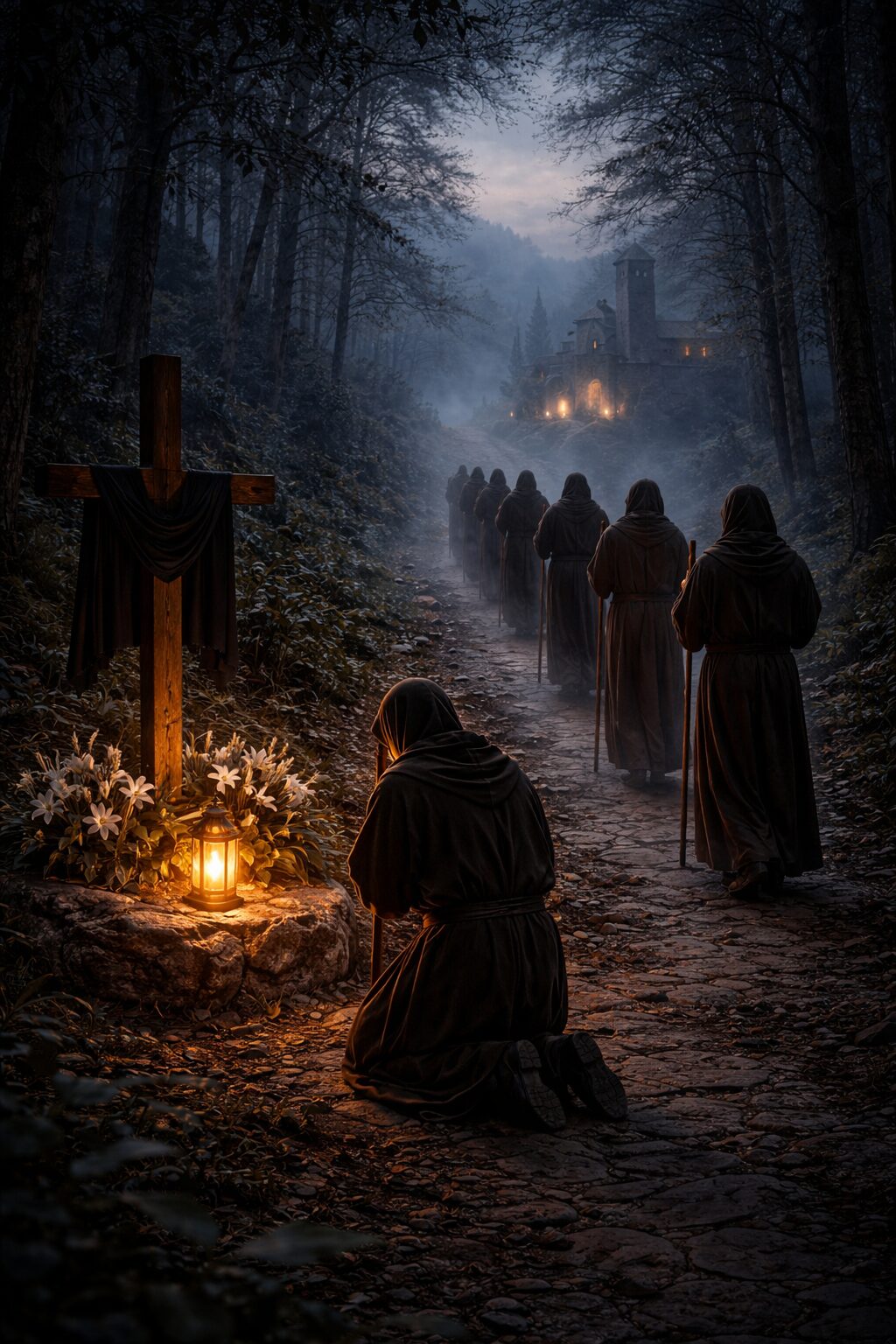
In reverent procession one moves from station to station. Each station is contemplated, the corresponding Gospel or a short meditation is read, the “We adore you, O Christ, and we bless you” is sung, and the Our Father is prayed together. One walks with the Lord: from the condemnation by Pilate through the scourging, the crowning with thorns, the carrying of the cross, the encounters with His Mother, Veronica and Simon of Cyrene, to the falls, the stripping, the crucifixion, the death on the cross and the burial.
This way is no mere remembrance – it is inner compassion. Every station mirrors one’s own soul: Where do I carry my cross? Where do I fall? Where do I need the helping hand of my neighbour? Where do I fail in faithfulness? In Kloster Nigredo – Gethsemane Garden this Way of the Cross is lived with particular radicality, for the very name is a constant reminder: Gethsemane and Calvary belong inseparably together. The brothers and guests experience in this hour the profound truth that the cross is not only the suffering of Jesus, but the place where the old self dies and the new man is born.
At 3 p.m. the solemn Good Friday liturgy follows in sober severity: the reading of the Passion according to John, extended intercessions for the whole world, the veneration of the Holy Cross – and finally Holy Communion from the hosts consecrated the previous evening.
After the celebration the community returns to Nigredo Monastery. The remainder of the day unfolds in strict silence: sitting, contemplation of the cross and silent prayer. In silent procession through the still wintry forest one walks. The soul sinks into the deepest Nigredo: death, emptiness, abandonment by God. And yet therein lies the first hidden grace: The Father does not leave the Son alone.
Holy Saturday – The Holy Silence of the Tomb
Holy Saturday is the day of greatest silence. Christ lies in the tomb. The church is silent. All services and liturgical actions on this day take place in the parish church of St. Laurentius – yet in Kloster Nigredo – Gethsemane Garden this silence is not merely observed, but lived through.
No noise, no unnecessary work. Only sitting and silent walking, contemplation of the empty altar, silent prayer of the Desert Fathers: “Lord, have mercy on me, a sinner.” It is the culmination of the Nigredo: all that is old has died, nothing new is yet visible. Yet whoever endures in this emptiness already senses the hidden movement of the Spirit – like the woman in the womb before the child is born. The holy Virgin who waits at the tomb becomes the model: faithful, vigilant, loving.
The Easter Fire – Sign of the Great Turning
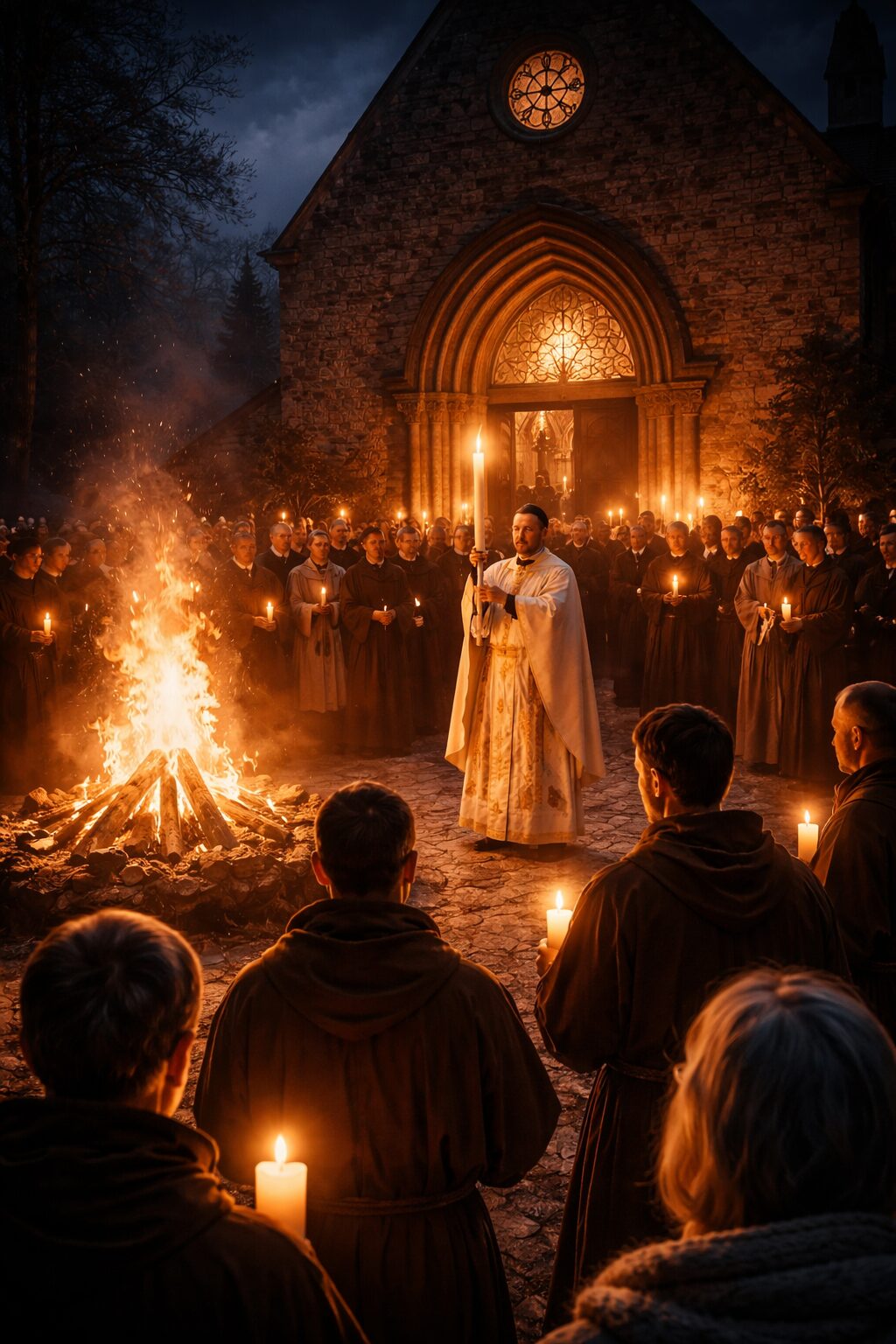
In the deep darkness of Easter night the community gathers in Nigredo Monastery. There the Easter fire is solemnly kindled – a powerful, almost martial act that pierces the darkness. The Easter fire is the visible sign of the great turning. This fire is not mere light, but the fire of the Holy Spirit that consumes all that is old and begets what is new.
It proclaims the profound truth: The blackest Nigredo is the womb of light. As John of the Cross teaches, the soul must pass through the dark night so that it may be purified and enlightened by the divine fire. The Easter fire shows: Without death there is no resurrection, without Gethsemane there is no empty tomb.
When the torches are lit from it and the community walks in silence through the night forest to the church, the way itself becomes prayer. The flickering light among the trees admonishes us with paternal tenderness: The Risen One goes before us. He transforms darkness into life.
May this holy fire also burn in your souls – for the purification of the old, for the birth of the new, and for the rediscovery of the symbolic Father in heaven.
Easter Vigil – The Breakthrough of Light
In the deep darkness of Easter night the community gathers at 9 p.m. before the parish church of St. Laurentius. The new fire is kindled – with a hard strike of flint on steel. The light leaps over. The Easter candle blazes. The Exsultet resounds – a deep, almost painful jubilation from the depths: “O happy fault… O necessary sin of Adam!”
The renewal of baptismal promises, the solemn Eucharist and the first Alleluia in weeks – all takes place in St. Laurentius. Whoever passes through this holy night experiences the resurrection not as distant doctrine, but as inner turning: from the death of the false self to the birth of the new human being – fruitful, generative in spirit.
Easter Sunday – The Day of Full Joy
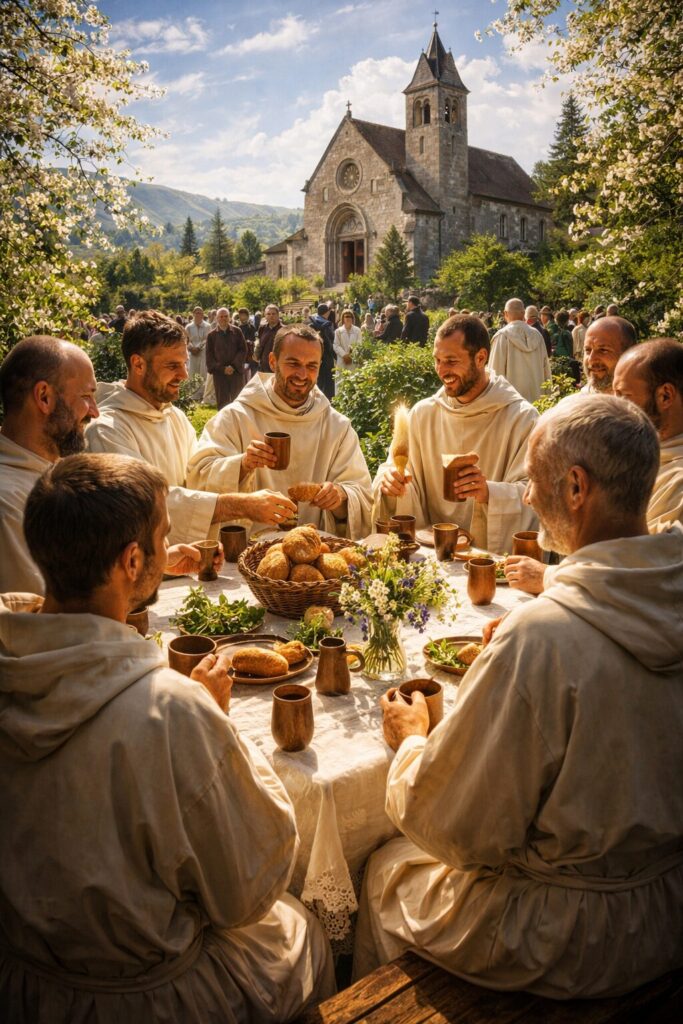
On Easter morning the bells of St. Laurentius ring again. At 10 a.m. the solemn Easter Sunday Eucharist is celebrated in the parish church – rejoicing, thankful, in white splendor and with the full Alleluia. Afterward the community returns to Kloster Nigredo – Gethsemane Garden. There a simple yet solemn meal is taken: bread, wine, the first spring herbs. It is the meal of the risen: the communion of those who have come out of the night.
The joy is deep: the certainty that the symbolic Father has been recognized and accepted anew. Here occurs the rediscovery of the Divine in love as union and wholeness.
Easter Monday – The Beginning of New Life
On Easter Monday at 10 a.m. the Eucharist is celebrated in the parish church of St. Laurentius. Afterward the community returns fully to Kloster Nigredo – Gethsemane Garden. The day is not a farewell, but the true departure into new life. Work is taken up again – with new strength: fields tended, wood chopped, prayer continued, everyday duties fulfilled in quiet gratitude.
The resurrection now permeates the ordinary. It makes the man a true father, the woman a true mother, the family the sacred place of divine order. It calls back to the healthy union of Animus and Anima, to the fruitfulness of body and spirit, to courageous witness in a world that has forgotten the symbolic Father.
Beginning
May the grace of this holiest of all occasions – from the night watch in St. Laurentius to the quiet work in Nigredo Monastery – lead every seeker to full conversion: to the rediscovery of the symbolic Father in heaven, to love that breaks in order to unite anew, to truth that sets free, to beauty that endures forever.